Building date:
Original use: Hop Dryer
Corner structures: Red brick quoins, 2½ bricks long and 4 bricks high.
Mortar application and content: Vertical, no embellishment
Types and uses of stones:
Types and choice of windows:
Structures with similar masonry details:
Masons who worked on building:
Unique features:
Map views courtesy Google Maps. Address is Google Earth confirmed; 42°54'33.02"N 75°14'27.57"W. Current owner of record, Wrobel as of the 2018 Tax Roll.
Town of Bridgewater and Oneida County Maps
The Roudabush Survey does not provide a street address number. The address given below is for the owner of the property; however, the Hop Dryer is located at the Gershom Shaul house property plot address 1079, which is not necessarily the same as the street number (not known at this time). A Goggle Maps search using the address of 1079 NY 8 Bridgewater NY will correctly locate the Hop Dryer. Use the GPS coordinates above to have the exact location of the Hop Dryer.
A rare cobblestone hop drying house with a European look is located at 927 Route 8 North, west side, north of Bridgewater, was built in 1850 by Gershom Shaul, a prosperous local farmer. It is on a farm now owned by James Wrobel and was one of the largest hop houses ever built in this region. It is 33 feet across and about 40 feet in diameter, and was used during the prosperous years of hop farming, until it ceased just after World War I. It closely resembles similar structures that existed in west Germany and northern France designed for dry rodent-free agricultural storage in wet, cold climates, only in this case it was used to dry hops. This design of of agricultural structure was common in northwestern Europe in the 14th to 18th centuries. David Hanna, Ph.D., Richard Palmer blog.
- "Cobblestone Masonry", 1966, Carl Schmidt: Name reference, Round Hop Dryer
- Page 89
- "Cobblestone Landmarks of New York State", 1978, by Olaf William Shelgren, Jr., Cary Lattin, and Robert W. Frasch, Photographs by Gerda Peterich: Name reference, Hop Dryer
- Page 157
- "The Era of Cobblestone Architecture", unpublished manuscript 1972. To access the manuscript content about this structure, see 58. Oneida County, Hop Dryer Wrobel Farm.
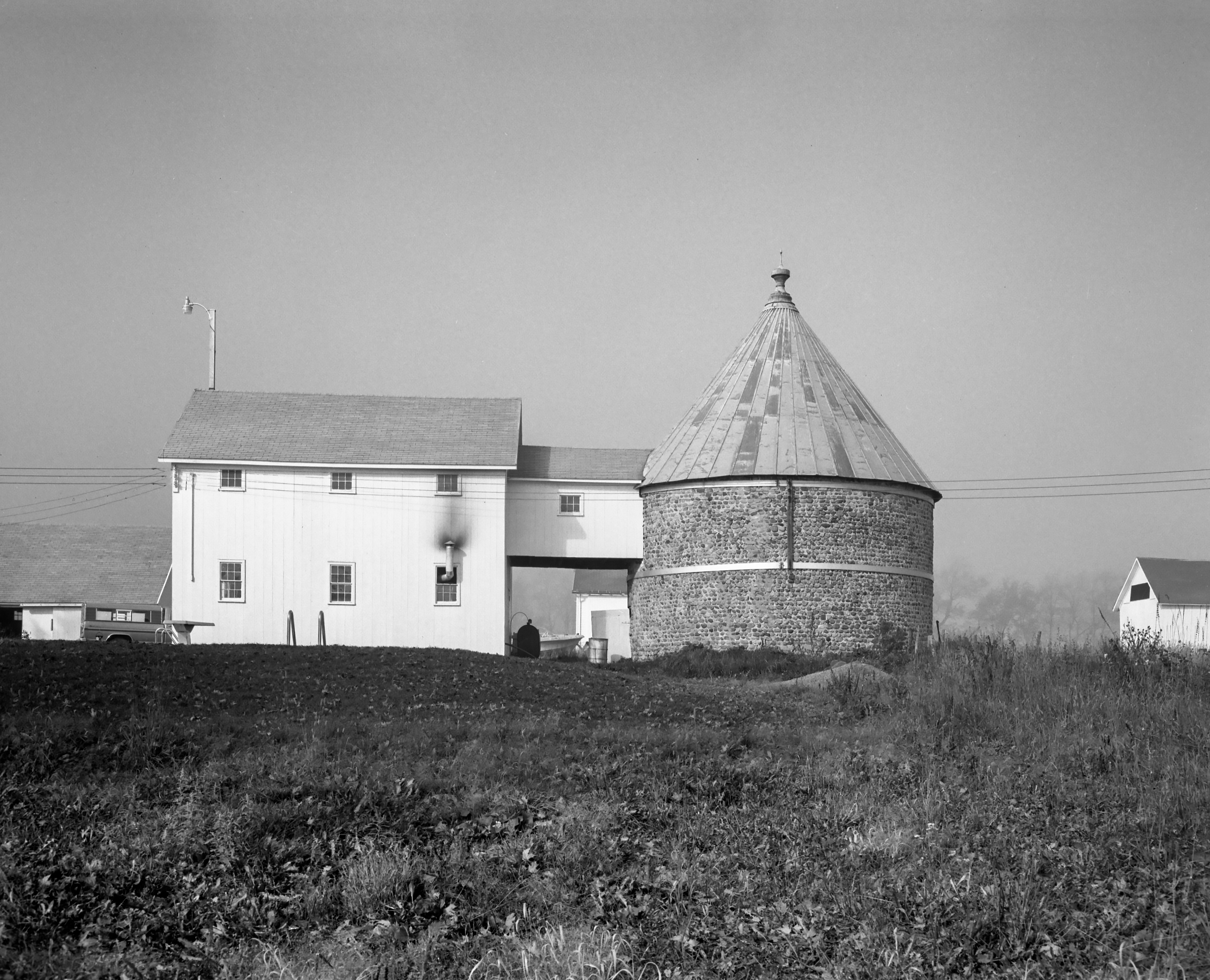 GP Oneida Bridgewater Bri-1_1 N.jpg ¹ 10/29/1971 | 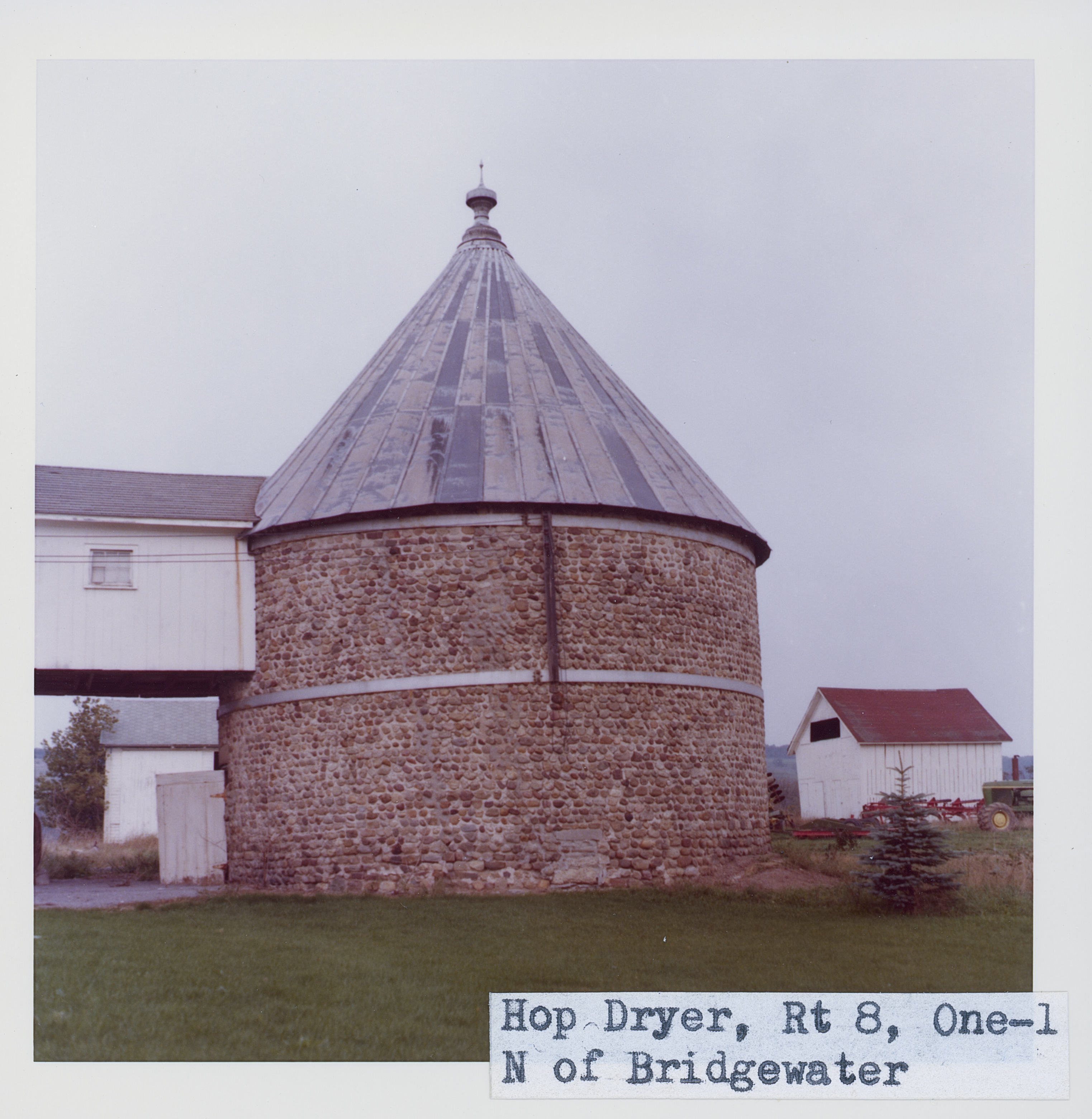 Bri_1_1.jpg | 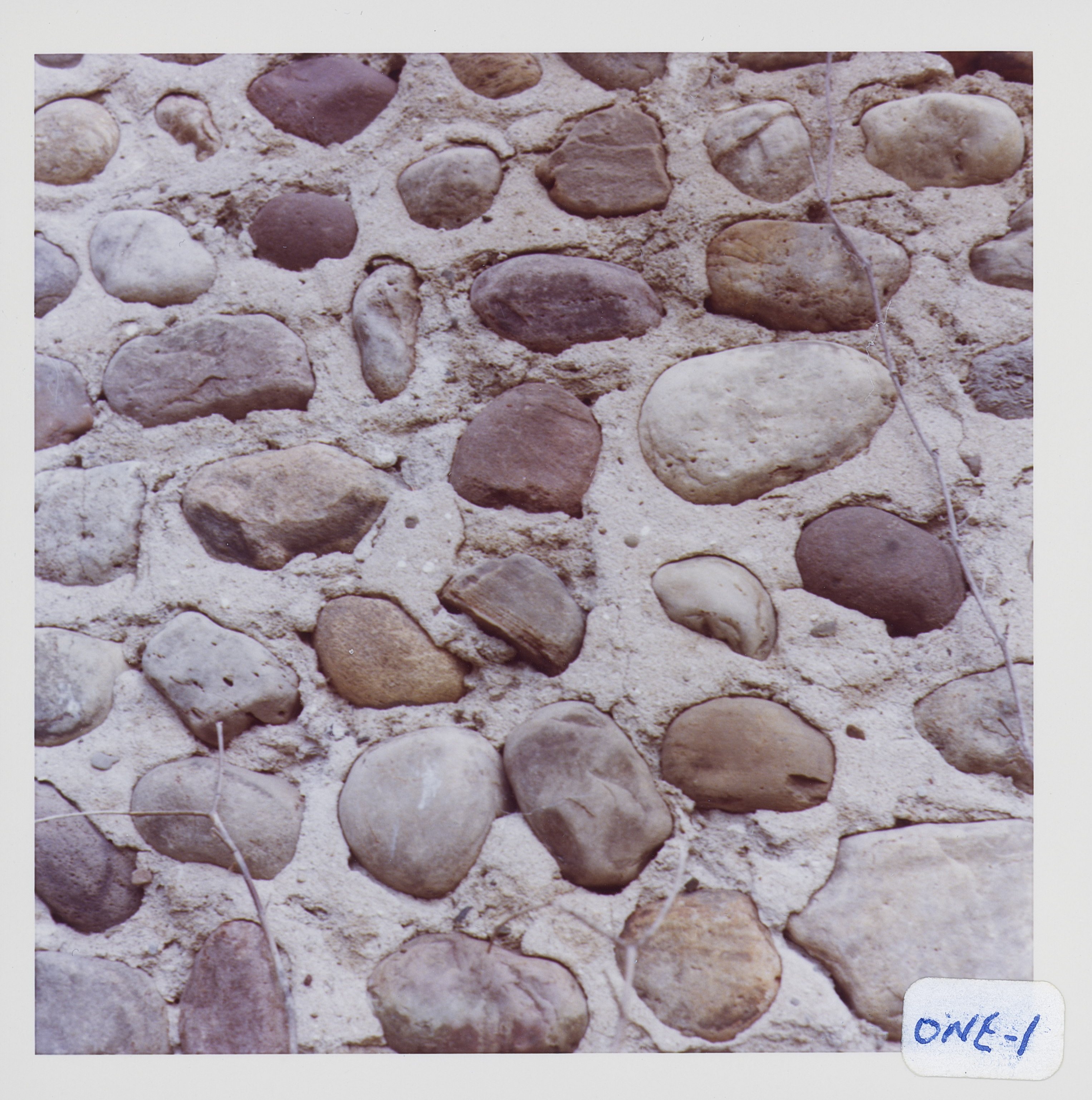 Bri_1_2.jpg | 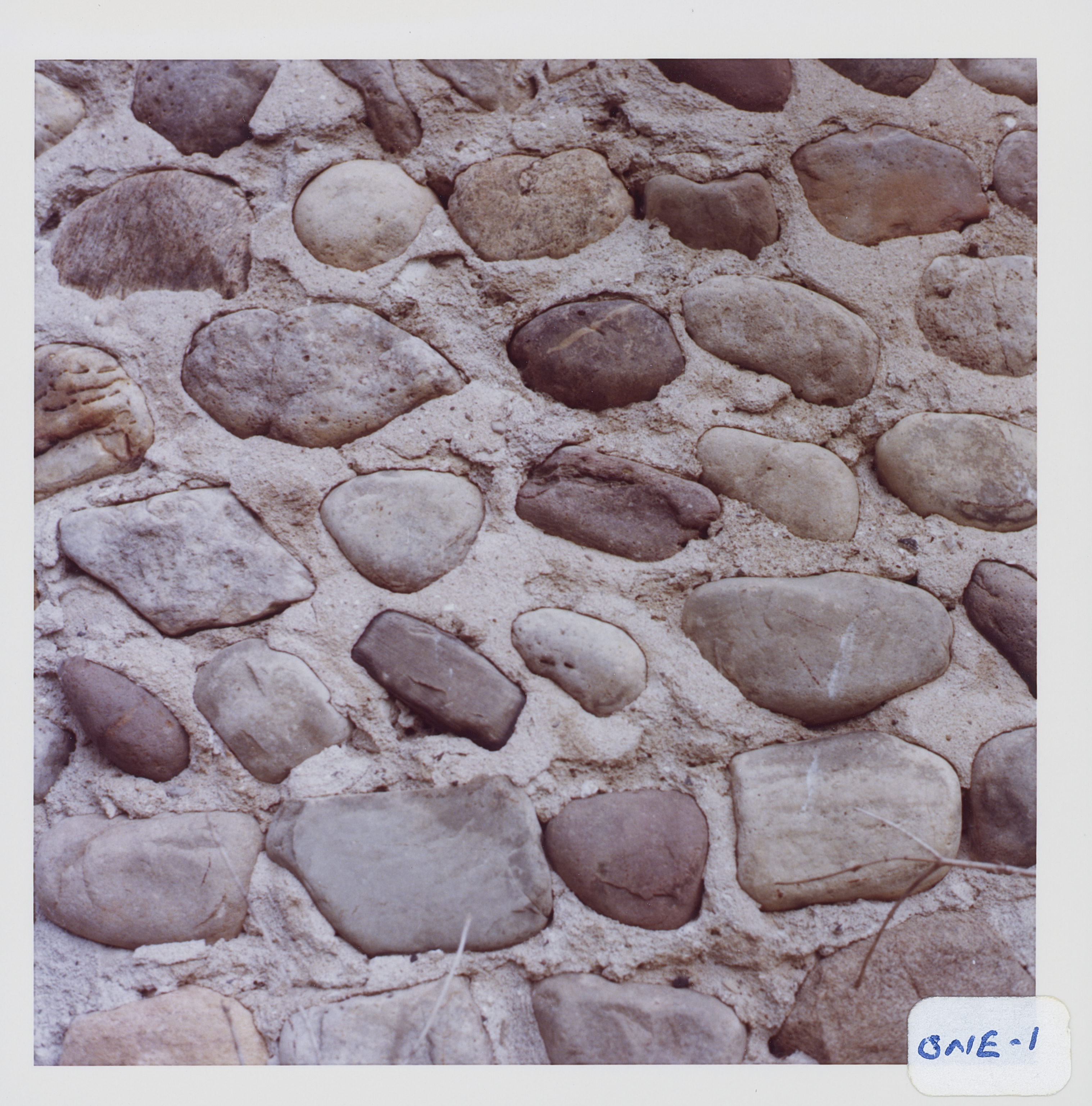 Bri_1_3.jpg |
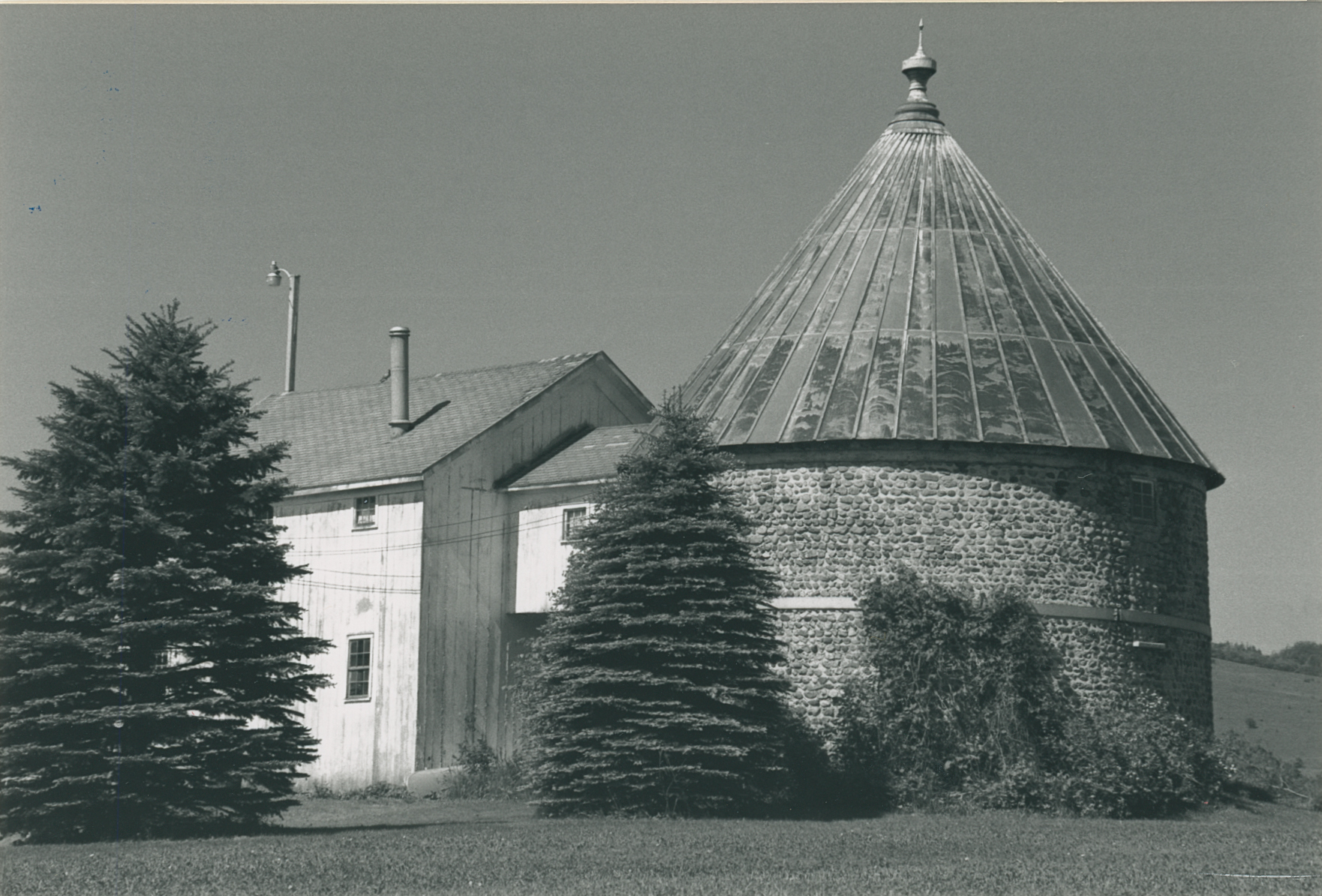 Bri-1 1079 NY 8 1.jpg ² | 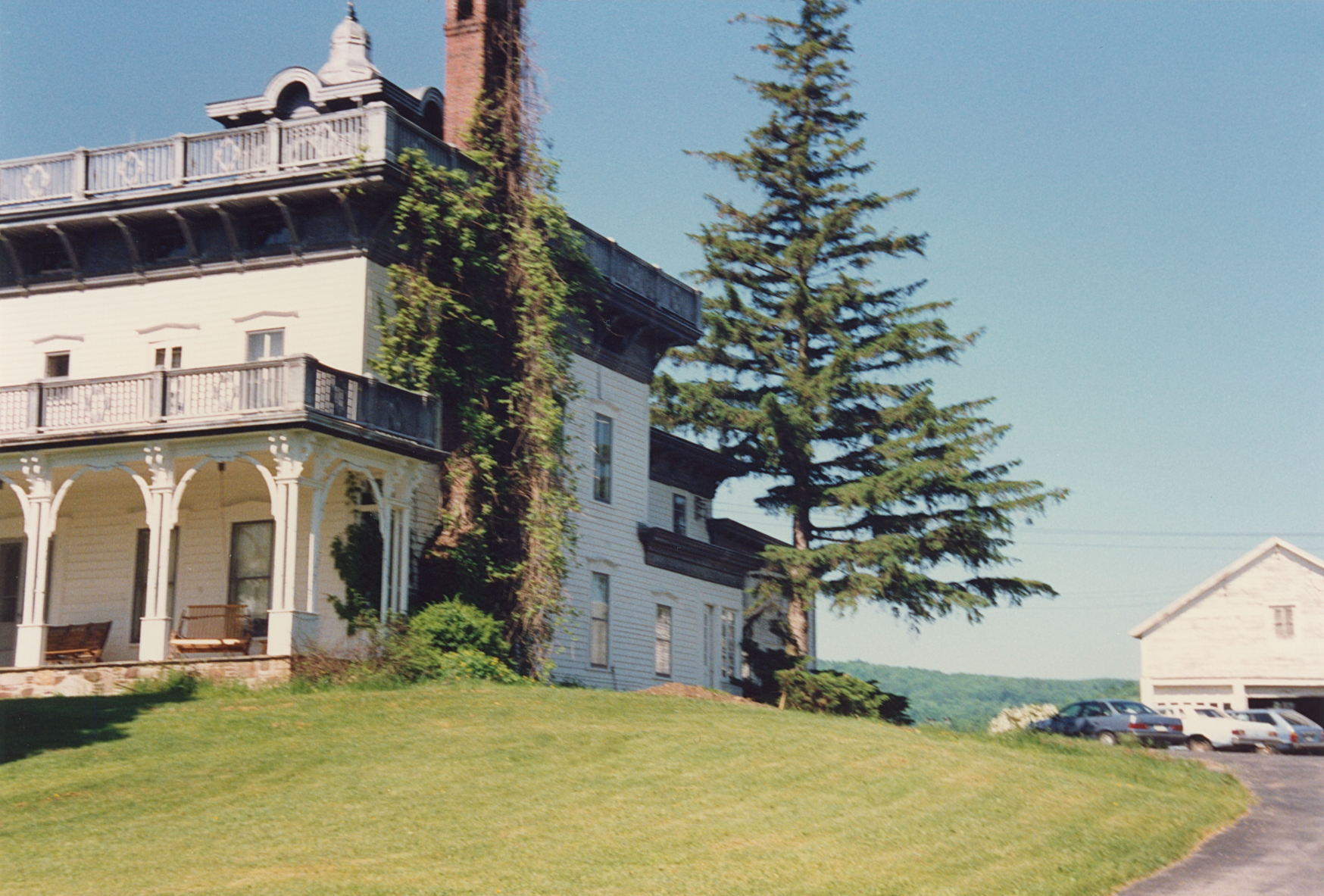 Bri-1 1079 NY 8 1.jpg ² | 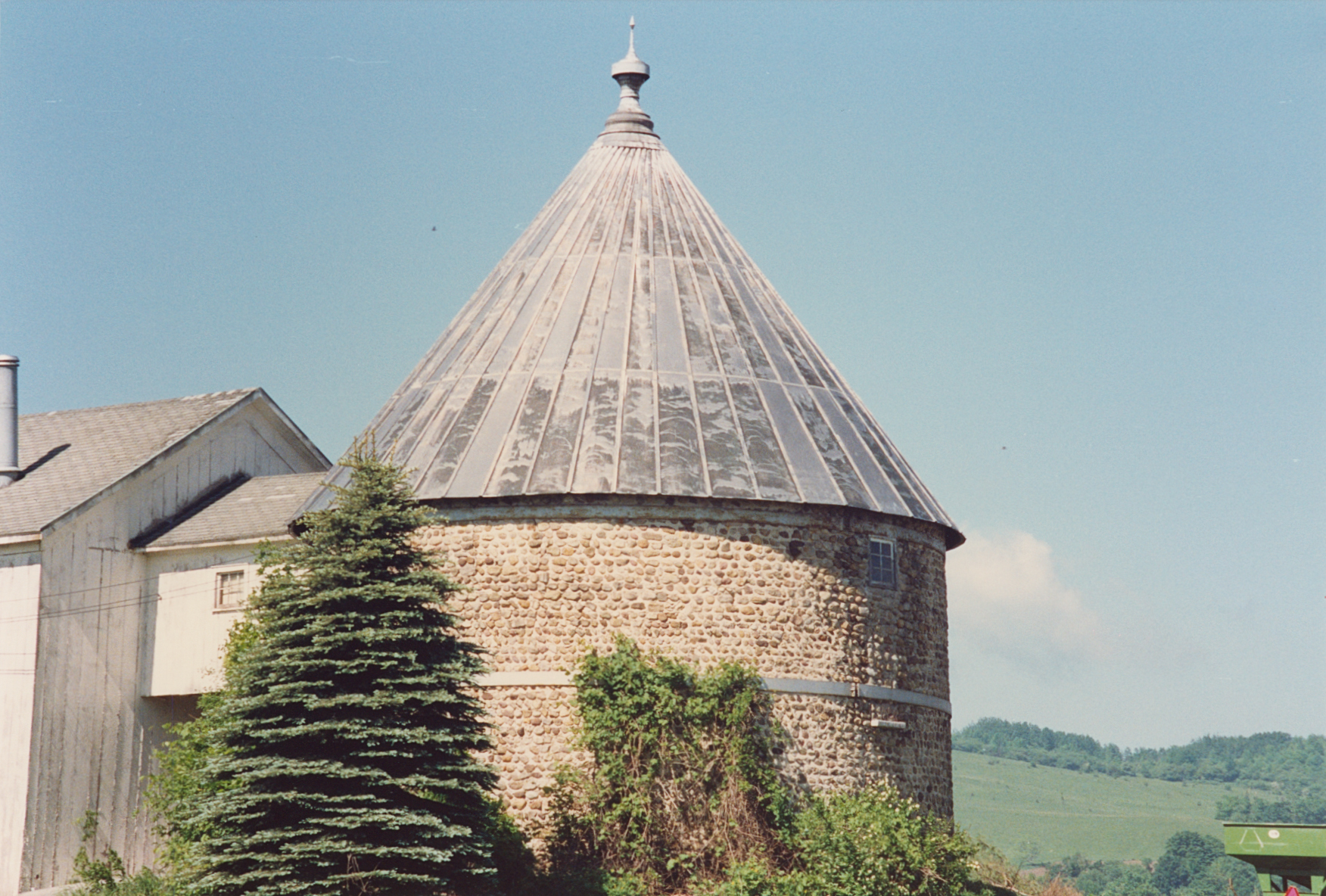 Bri-1 1079 NY 8 1.jpg ² | 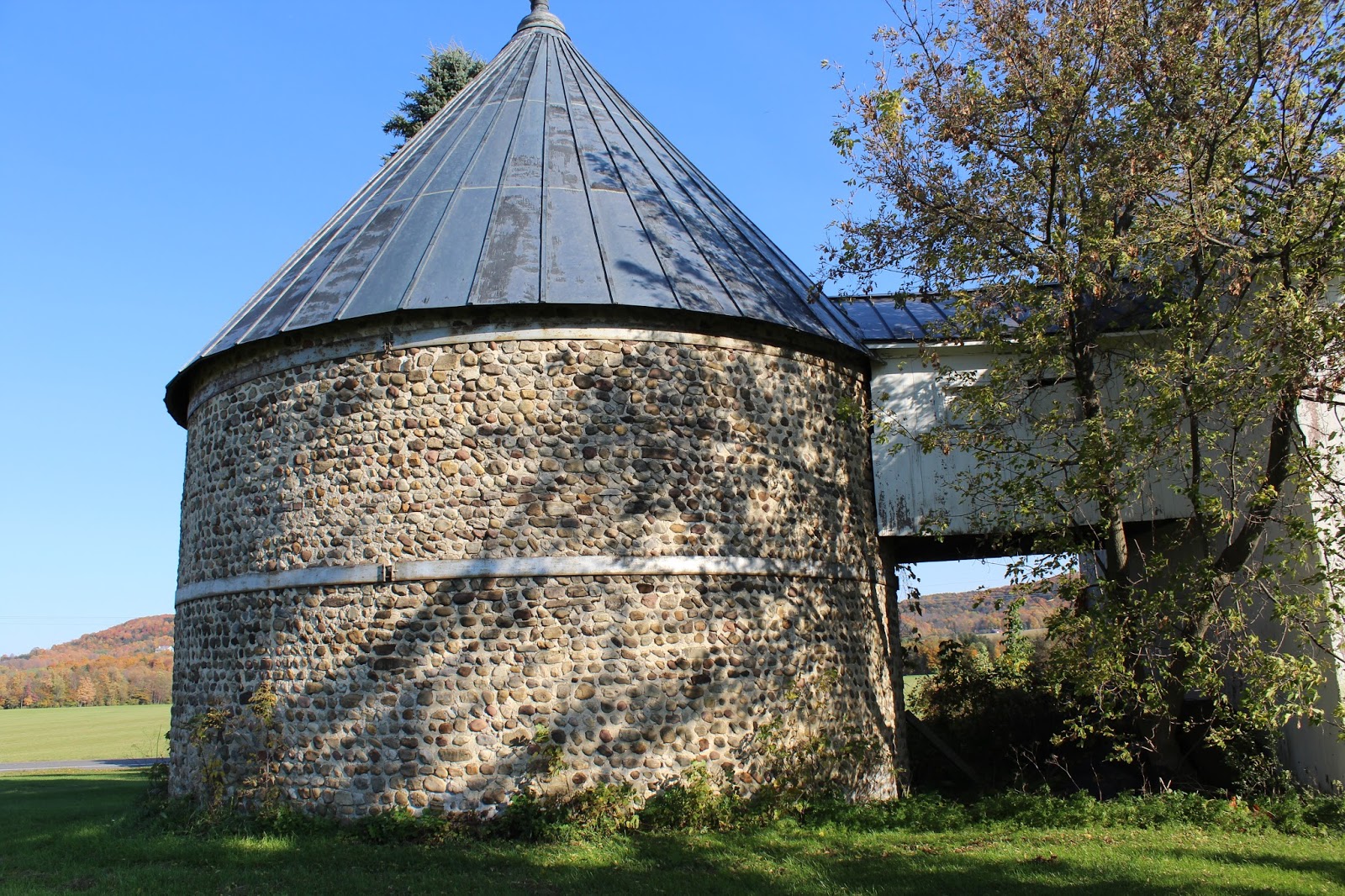 Hophouse 1.jpg ² |
 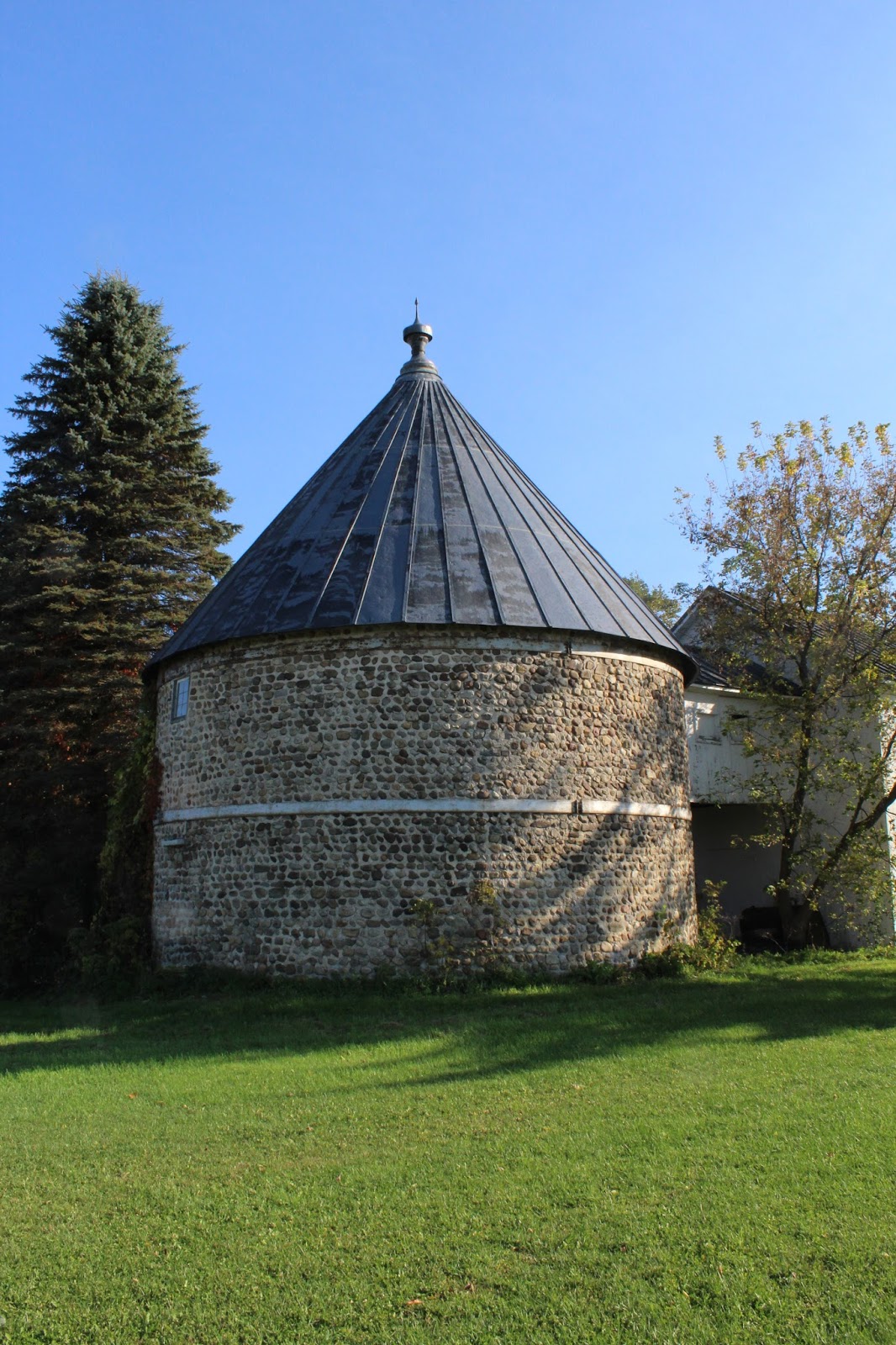 Hophouse 2.jpg ² | 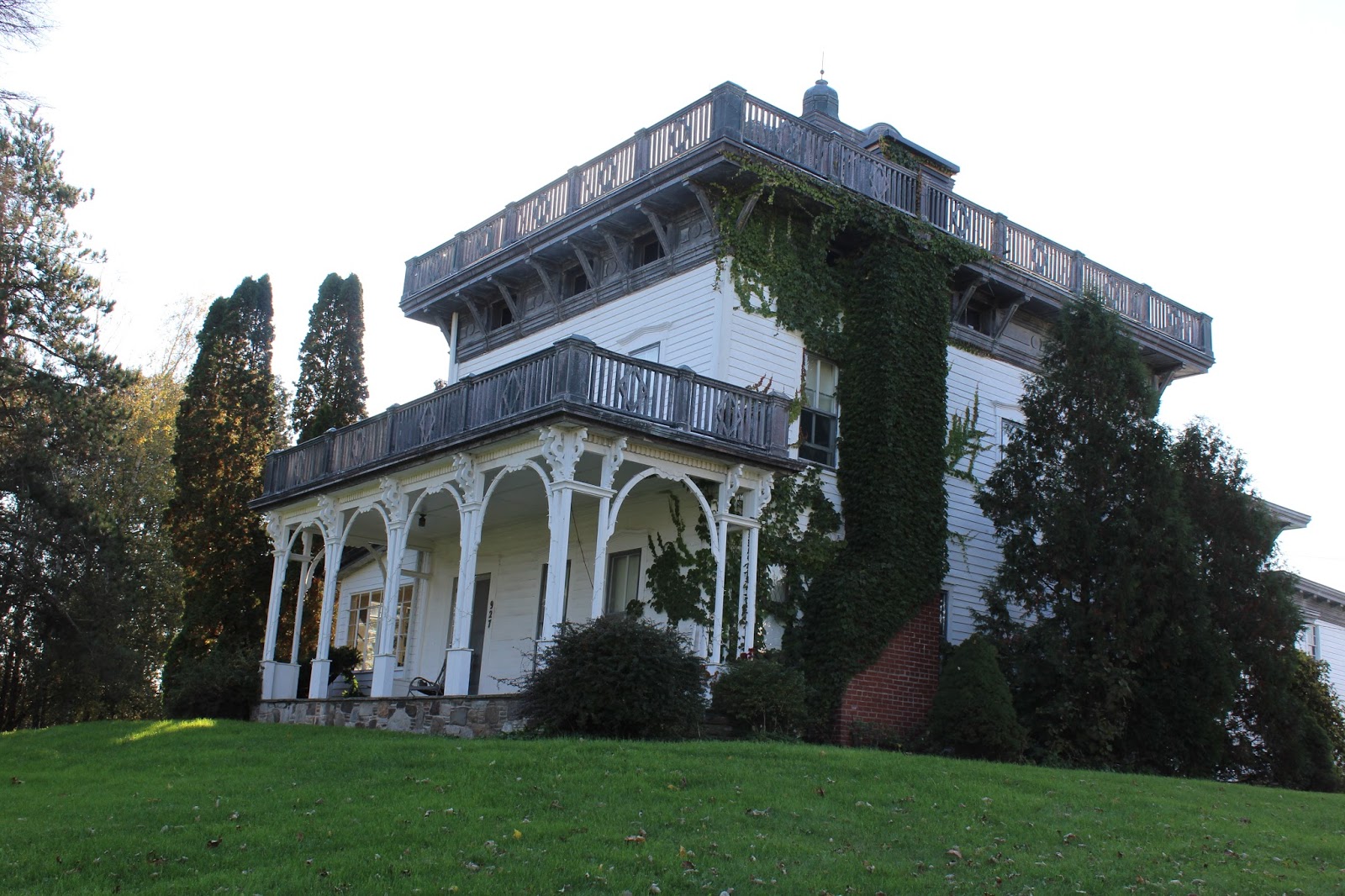 Gershom Shaul House.jpg ³ The Gershom Shaul House itself reflects the wealth and prosperity of a 19th century farmer. |
¹ Photography courtesy Gerda Peterich. Cobblestone Museum.
² Photography courtesy Martin and Sheila Wolfish.
³ Photography courtesy Richard Palmer.
